Some journeys change your passport. Others change your perspective. The most unforgettable trips aren't measured by how many countries you visit or how many stamps accumulate in a well-worn booklet. They're remembered because they quietly reshape the way you see the world — and yourself within it. These are the experiences that linger long after your suitcase has been unpacked, after the tan has faded, after the photographs have been filed away. They leave something behind that no customs form can account for: a shift in understanding, a recalibration of wonder, a sense that the world is both larger and more intimate than you had previously allowed yourself to believe.
Swim with Humpback Whales in Tonga
Imagine slipping into crystal-clear water as a humpback whale and her calf glide silently beneath you. There is no aquarium glass, no barrier — only respectful distance and profound wonder. The water is warm, the visibility extraordinary. You float, weightless, as these massive creatures move with a grace that defies their size.
The mother whale is nearly fifty feet long, yet she navigates the space around you with astonishing precision. Her calf, curious and playful, spirals upward, exhaling a stream of silver bubbles. You hear their songs — low, resonant, otherworldly — transmitted through the water and felt as much as heard. It is a conversation you cannot understand but are privileged to witness.
The experience has a way of making human worries feel wonderfully small. In the presence of such intelligence, such calm power, the usual preoccupations — deadlines, inbox counts, minor grievances — dissolve. What remains is a kind of reverence, a recognition that you are sharing space with beings whose lives are as complex and meaningful as your own, yet utterly different.
Tonga is one of the few places on Earth where swimming with humpback whales is permitted, and the regulations are strict. Small groups, licensed guides, no touching. The rules exist to protect the whales, but they also protect the experience itself — ensuring that what you encounter is not a performance but a glimpse into a world that exists entirely independent of human observation.
“The finest journeys don't end at the airport. They return home with you, changing the questions you ask.”
Learn to Sail the Greek Islands
Whitewashed villages, sapphire seas, and afternoons guided only by the wind. Island-hopping under sail transforms travel into adventure, where every harbor becomes an invitation to linger a little longer. There is something profoundly satisfying about navigating by wind and tide, about reading the water and adjusting the sails, about arriving somewhere not because an algorithm suggested it but because the conditions were right.
The Cyclades — Santorini, Mykonos, Paros, Naxos — are justly famous, but they reveal themselves differently from the deck of a sailboat. You approach each island slowly, watching the coastline emerge from the haze. You anchor in quiet coves where the only other visitors are local fishermen. You swim off the stern in water so clear you can see the anchor resting on the seabed twenty feet below.
Sailing demands presence. You cannot multitask your way across the Aegean. You must pay attention to the wind, the rigging, the chart, the horizon. It is a kind of enforced mindfulness, and the result is a peculiar sense of freedom. You are busy, but not hurried. You are moving, but not rushed. Time takes on a different quality, measured not in hours but in passages: morning sail, midday swim, afternoon nap, evening mooring, dinner ashore.
The Greek islands have been sailed for millennia, and there is a continuity in the experience that feels almost mythic. You are doing what Odysseus did, what traders and explorers and lovers have done for thousands of years. The technology has improved, but the fundamental relationship between human, boat, wind, and sea remains unchanged.
Ride Icelandic Horses Across Volcanic Landscapes
Few places feel as otherworldly as Iceland. Crossing lava fields, waterfalls, and black-sand plains on horseback offers a perspective impossible to find from behind a car window. The landscape is stark, elemental, almost lunar. Moss-covered rocks stretch to the horizon. Steam rises from fissures in the earth. Glaciers loom in the distance, blue-white and ancient.
Icelandic horses are small, sturdy, and remarkably sure-footed. They have been bred in isolation for over a thousand years, and they possess a unique gait called the tölt — a smooth, four-beat movement that allows them to cover rough terrain at speed without jostling the rider. It feels less like riding and more like gliding.
The silence is profound. No engine noise, no traffic, no hum of civilization. Just the rhythmic sound of hooves on stone, the occasional snort of a horse, the wind moving across the open land. You ride for hours, and the landscape barely changes — yet it never feels monotonous. There is something hypnotic about the repetition, the vastness, the sense of being utterly alone in a place that predates human presence by millions of years.
Iceland has a way of recalibrating your sense of scale. What seemed important before — the minor dramas of daily life, the endless scroll of news and opinion — shrinks in the face of such geological indifference. The land does not care about your plans. It simply is. And there is a strange comfort in that.
Dive the Great Blue Hole in Belize
For certified divers, descending into one of the world's most famous underwater sinkholes is an unforgettable experience. The Great Blue Hole is a near-perfect circle of deep blue water, over three hundred meters across and more than one hundred meters deep. From above, it looks like a sapphire set into the turquoise shallows of the Belize Barrier Reef. From below, it is something else entirely.
The descent begins in open water, sunlight filtering down in shafts. As you drop deeper, the light fades and the temperature drops. At around forty meters, the stalactites appear — massive limestone formations that hang from an ancient cave ceiling, formed when the hole was above sea level during the last ice age. They are enormous, some as thick as tree trunks, suspended in the blue void.
There is a cathedral-like quality to the space. The scale, the silence, the sense of being inside something both beautiful and indifferent. You are a visitor in a place that has existed for thousands of years and will exist long after you surface. The stalactites do not care that you have traveled halfway around the world to see them. They simply are.
The dive is challenging — deep, with limited bottom time and mandatory decompression stops. But the difficulty is part of the point. This is not a casual snorkel. It requires training, preparation, respect. And in return, it offers something rare: a glimpse into a world that most people will never see, a reminder that the planet still holds places of genuine mystery.
Wander Kyoto During Cherry Blossom Season
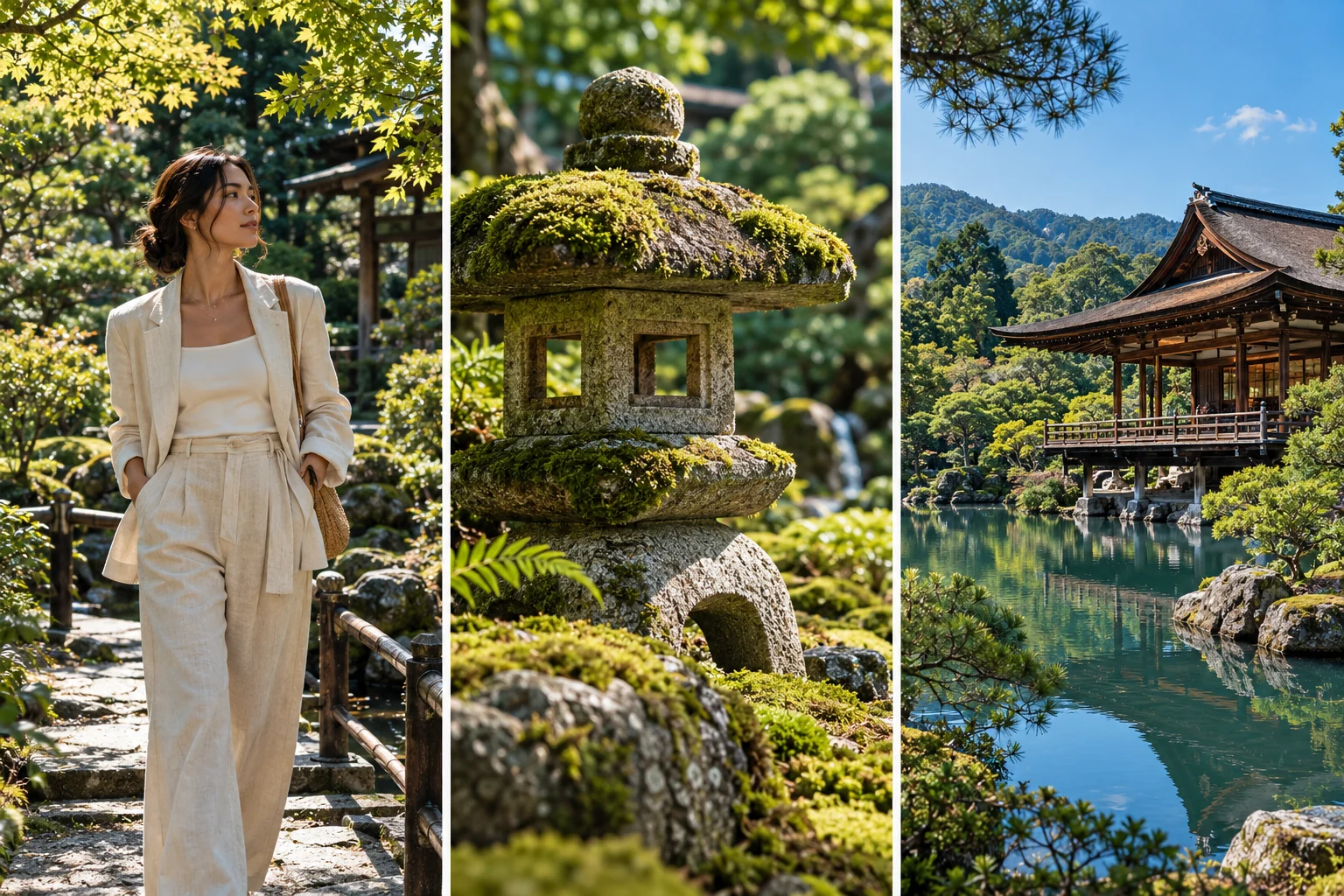
Spring in Kyoto is a masterclass in beauty and impermanence. Ancient temples, quiet gardens, and streets lined with blooming cherry trees invite visitors to slow down and savor each passing moment. The blossoms last only a week or two, and their brevity is part of their power. The Japanese have a word for this: mono no aware, the poignancy of things, the awareness that beauty is fleeting.
Kyoto in sakura season is crowded, yes, but the crowds are part of the ritual. Families spread picnic blankets beneath the trees. Couples stroll hand in hand along the Philosopher's Path. Photographers jostle for position at Kiyomizu-dera. Everyone is there for the same reason: to witness something that will not last.
The best moments come early in the morning or late in the evening, when the tour groups have dispersed and the light is soft. A temple garden at dawn, petals drifting across a still pond. A narrow street in Gion at dusk, lanterns glowing, blossoms pale against the darkening sky. These are the moments that lodge in memory, that return unbidden years later.
Kyoto teaches a particular kind of attention. It asks you to notice the small things: the way light falls through a paper screen, the sound of gravel underfoot, the precise arrangement of stones in a garden. It is a city that rewards slowness, that reveals itself not to those who rush from sight to sight but to those who are willing to sit, to wait, to simply be present.
“The most meaningful traveler is not the one who collects destinations. It is the one who collects understanding.”
Sleep Beneath the Stars in the Sahara Desert
Silence takes on new meaning in the desert. Far from city lights, the Milky Way stretches overhead while the dunes shift gently with the evening wind. It is both humbling and unforgettable. The silence is not merely the absence of sound but a presence in itself, a kind of weight, a reminder of how much noise we carry with us in daily life.
The Sahara is vast beyond comprehension. Dunes roll to the horizon in every direction, their shapes sculpted by wind into curves and ridges that seem almost liquid. The sand changes color with the light: gold at midday, amber at sunset, silver under the moon. At night, the temperature drops sharply, and the stars emerge in such profusion that the sky seems crowded.
You sleep in a Berber camp, a cluster of low tents arranged around a fire. Dinner is tagine and mint tea, served on rugs spread across the sand. Conversation is minimal. There is something about the desert that discourages chatter, that invites instead a kind of companionable quiet. After the meal, you lie on your back and watch the sky. Satellites drift past. Meteors streak and vanish. The Milky Way arcs overhead, so bright you can see your shadow by its light.
The desert has been a place of pilgrimage and revelation for millennia. Prophets and mystics have sought it out, drawn by its emptiness, its clarity, its refusal to offer distraction. You understand why. There is nowhere to hide in the desert, no way to avoid yourself. It strips away the inessential and leaves only what remains.
Cook in Tuscany
The best souvenirs are often recipes. Learning to prepare fresh pasta, tasting olive oil pressed from fruit harvested that morning, sharing long meals around rustic tables — these experiences reveal that Italian cuisine is less about perfection and more about generosity. It is about using what is local, what is seasonal, what is available. It is about taking time.
A cooking class in Tuscany typically begins at the market. You walk through stalls piled with tomatoes, zucchini, herbs, cheeses. Your instructor — often a nonna who has been cooking for sixty years — selects ingredients with a practiced eye. She knows which vendor has the best porcini, which olive oil is worth the price, which wine will pair with the meal you are about to prepare.
Back in the kitchen, you learn by doing. Kneading dough for pappardelle. Rolling out sfoglia. Shaping tortellini. The work is tactile, meditative. Flour dusts the table. Your hands learn the feel of properly hydrated dough, the resistance of gluten developing, the slight give that signals readiness. There is no rushing. The pasta will be ready when it is ready.
The meal that follows is long, unhurried, punctuated by laughter and stories. Wine flows. Courses appear and are savored. You realize that the cooking was only part of the lesson. The real teaching is in the rhythm, the refusal to hurry, the understanding that food is not fuel but connection. You return home with recipes, yes, but also with a different relationship to time, to effort, to the pleasures of making something with your hands.
Explore the Galápagos Islands
Few destinations offer such intimate encounters with wildlife. Sea lions, giant tortoises, marine iguanas, and blue-footed boobies coexist in an ecosystem that inspired scientific history and continues to inspire awe. The animals here have no fear of humans, not because they have been habituated but because they have never learned to be afraid. You are not a threat. You are simply another creature sharing the landscape.
A sea lion pup waddles up to investigate your shoes. A giant tortoise, easily a hundred years old, munches calmly on cactus as you stand three feet away. A marine iguana — the only seafaring lizard on Earth — sneezes salt spray and returns to basking on black volcanic rock. Blue-footed boobies perform their courtship dance, lifting their absurdly colored feet in a display that is both comical and earnest.
The Galápagos are a living laboratory, the place where Charles Darwin's observations began to coalesce into the theory of evolution by natural selection. Walking the same islands he walked, seeing the finches and tortoises and iguanas he saw, you feel the weight of that history. This is where humanity began to understand its place in the natural world, where we learned that we are not separate from nature but part of it, subject to the same forces, shaped by the same processes.
The islands are carefully protected, visitor numbers limited, activities regulated. You travel by small boat, guided by naturalists who know every species, every behavior, every geological feature. The rules are strict, but they ensure that what you experience is authentic, that the ecosystem remains intact, that future visitors will encounter the same wonder you do.
Chase the Northern Lights
Whether viewed from northern Norway, Finland, Iceland, or Alaska, the aurora borealis reminds us that nature still possesses the ability to leave us speechless. No photograph truly captures the experience. The lights move, pulse, shift. They are green, sometimes pink, occasionally red or violet. They ripple across the sky like curtains in a breeze, or explode in sudden bursts of brilliance, or glow steadily for minutes before fading.
The science is well understood: solar wind, magnetosphere, atmospheric gases excited by charged particles. But knowing the mechanism does nothing to diminish the awe. If anything, it deepens it. You are watching the interaction between our planet and the sun, a process that has been occurring for billions of years, long before there were eyes to witness it.
Chasing the aurora requires patience. The lights are fickle, dependent on solar activity, cloud cover, darkness. You may wait for hours in subzero temperatures, scanning the northern horizon, seeing nothing. And then, suddenly, a faint glow. A brightening. A ribbon of green unfurling across the stars. You forget the cold. You forget everything except the sky.
There is something primal in the response to the aurora, something that predates language. Indigenous peoples across the Arctic have myths and stories about the lights — spirits, ancestors, omens. Standing beneath them, you understand why. They feel animate, intentional, as if the sky itself is alive and aware. It is one of the few experiences in modern life that feels genuinely numinous.
“Sometimes the greatest luxury isn't where you stay. It's allowing yourself to be changed by where you've been.”
Stay Somewhere You'll Never Forget
An overwater bungalow in French Polynesia. A restored castle in Scotland. A glass cabin beneath Arctic skies. A safari lodge overlooking the African savanna. Sometimes the place you sleep becomes part of the story itself, not merely a base for exploration but a destination in its own right.
These are accommodations designed not just for comfort but for experience. A bungalow where you can slip directly from your bed into turquoise water. A castle where you dine in a hall that has hosted guests for five hundred years. A glass-walled cabin where you lie in bed and watch the aurora dance overhead. A lodge where elephants drink from the waterhole at dawn while you sip coffee on the veranda.
The luxury here is not about thread count or marble bathrooms, though those may be present. It is about place, about being somewhere so extraordinary that the simple act of waking up feels like a gift. It is about alignment between setting and experience, about staying somewhere that deepens rather than distracts from your encounter with the world.
These places tend to be remote, intentionally so. Getting there requires effort — a long flight, a boat transfer, a drive on unpaved roads. But the remoteness is part of the value. You are far from the familiar, from the routines and obligations that structure daily life. You are somewhere that demands presence, that makes it difficult to remain unchanged.
Travel Well
Learn a few words in the local language. Support local artisans. Respect traditions. Take fewer photographs and spend more time simply observing. Leave every place a little better than you found it. These are not rules but invitations, ways of moving through the world that honor both the places you visit and the people who live there.
Traveling well means recognizing that you are a guest. It means understanding that the world does not exist for your entertainment, that cultures are not theme parks, that people are not props in your Instagram story. It means approaching each place with humility, with curiosity, with a willingness to be taught.
It also means traveling lighter — not just in terms of luggage but in terms of expectations. The best experiences are often the ones you did not plan, the conversations that arise unexpectedly, the detours that become highlights. Rigid itineraries leave no room for serendipity. The traveler who insists on checking every box often misses the moments that matter most.
And it means being willing to sit with discomfort. Travel is not always pleasant. You will be lost, confused, frustrated. You will misunderstand and be misunderstood. You will eat things you do not like and sleep in beds that are too hard or too soft. But discomfort is often the price of growth. The moments that challenge you are frequently the ones that change you.
The Greatest Souvenir
The finest journeys don't end at the airport. They return home with you. They change the questions you ask. They expand your imagination. They remind you that the world is infinitely larger, kinder, and more beautiful than your routine ever allows you to believe.
You return with stories, yes, but also with something less tangible: a shift in perspective, a recalibration of what matters. The problems that loomed large before you left may seem smaller now, or they may seem more urgent, but either way they are seen differently. You have been reminded that your way of living is not the only way, that your assumptions are not universal, that the world contains multitudes.
This is the real gift of travel: not escape but return. You come back to the same life, the same responsibilities, the same routines — but you are not quite the same person. You carry with you the memory of whales singing in Tongan waters, of stars above the Sahara, of cherry blossoms drifting across a Kyoto pond. And those memories become a kind of ballast, a reminder that there is more to life than the narrow channel of daily habit.
The greatest souvenir is not a photograph or a trinket but a question: What else is possible? What else is out there? What else might I become? Travel plants that question and lets it grow. And if you are lucky, if you are paying attention, it continues to grow long after you have returned home, shaping the choices you make, the risks you take, the life you build.
Because sometimes the greatest luxury isn't where you stay. It's allowing yourself to be changed by where you've been. It's returning home and discovering that home, too, looks different now — not because it has changed, but because you have. And that difference, that quiet transformation, is the passport to wonder that no border agent can stamp, no airline can revoke, no time can erase.
Before you go
Two quiet questions.
How much of what you just read named something you already know inside your own body?
How much did this open a new question you didn’t have before?
— End —
NirvaLife Magazine · July 2026